
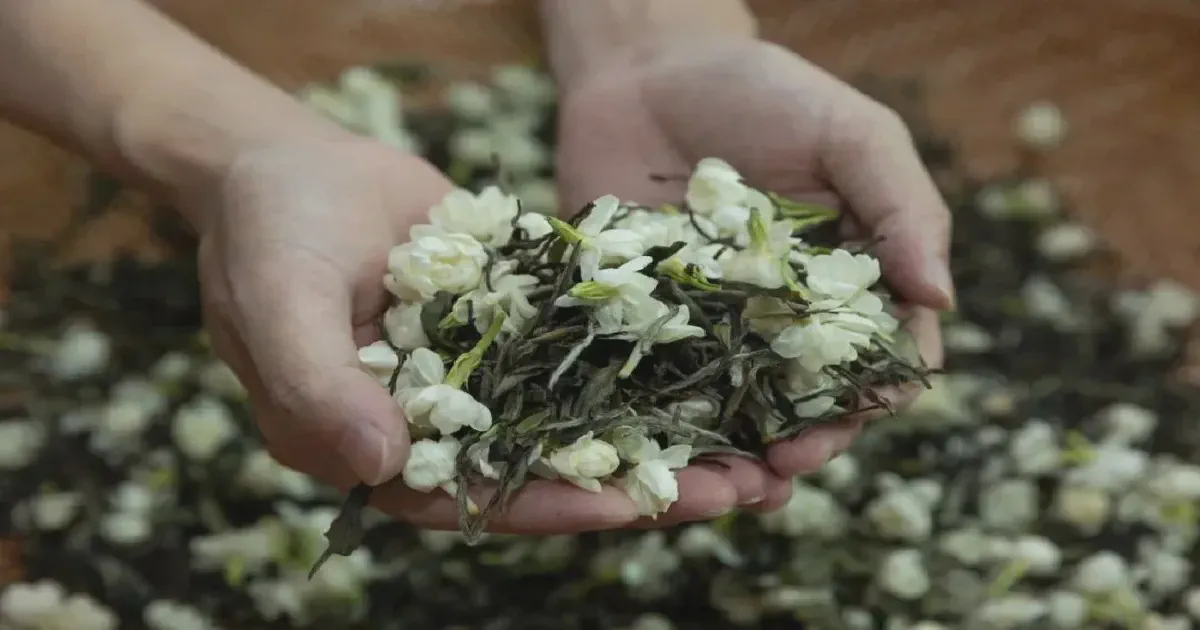
The Jasmine Tea Behind Half of China’s Milk Tea Boom: How Long Can It Stay Hot?
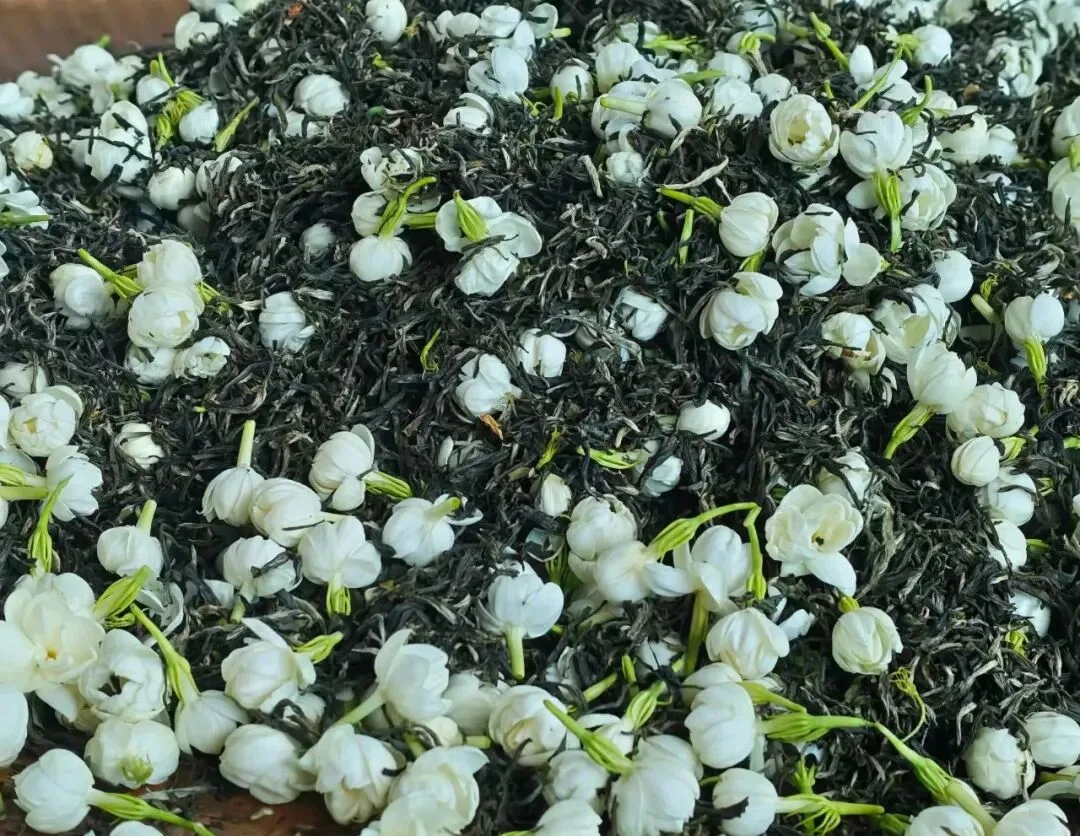
If one “dark horse” base tea has dominated China’s tea-drink market in recent years, jasmine tea is certainly on the ballot. Once the everyday staple in the cups of older consumers in northern China, it has quietly taken over young people’s consumption scenarios. Buoyed by the rapid expansion of new-style tea chains and a growing young consumer base, the jasmine tea industry has entered a new stage: its role now goes beyond traditional drinking and gifting to standardized tea bases for beverages, regional brand carriers, and a modern consumption symbol.
This piece reads the industry data — production and sales structure, demand shifts, the new-style tea driver, regional divergence, and the path to high-quality growth — to ask whether this dark horse can hold its seat.
I. Where the Industry Stands Today
Production and sales: volumes up since 2017
From 2017 to 2024, China’s jasmine tea output grew from 99,000 tonnes to 138,100 tonnes, a cumulative rise of 39.5%. Domestic consumption climbed from 97,800 tonnes in 2019 to 127,600 tonnes in 2024. The traditional northern market remains the base, but the core growth engine is new: new-style tea chains, bottled teas, and e-commerce retail, amplified by a younger buyer pool.
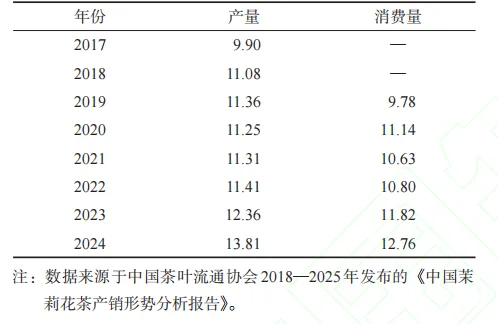
China’s jasmine tea production and sales, 2017–2024. Data: China Tea Marketing Association annual industry reports.
The industry chain: two raw materials, one scenting craft
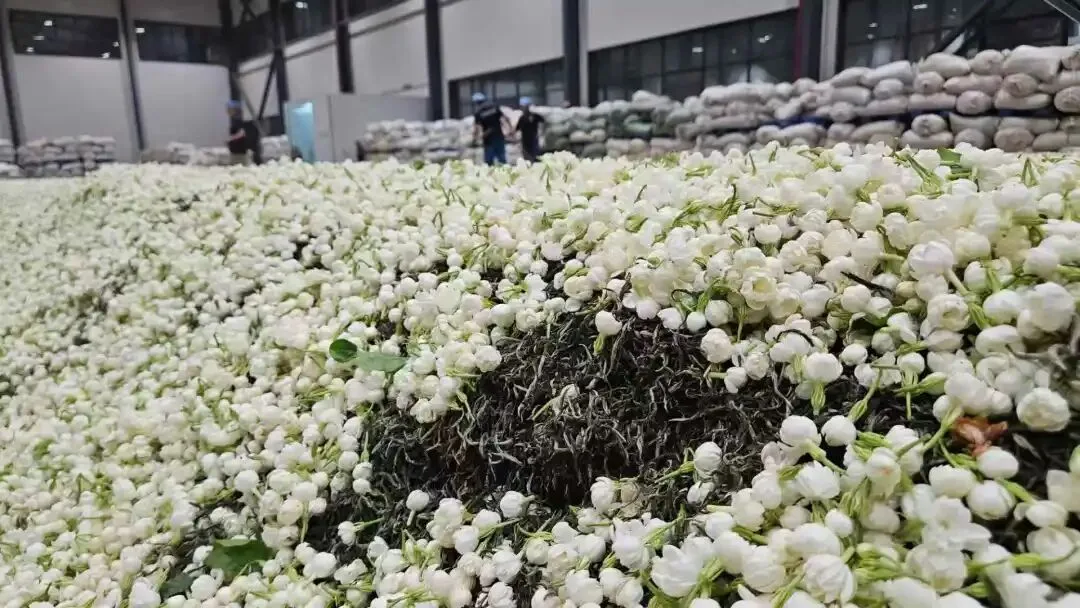
Unlike most teas, jasmine tea depends on two inputs at once — fresh jasmine flowers and a tea base (usually green tea). Upstream flower supply is highly concentrated in four origins: Guangxi’s Hengzhou, Fujian’s Fuzhou, Sichuan’s Qianwei and Yunnan’s Yuanjiang. Midstream scenting — historically an artisan craft judged by experience — is now absorbing automated scenting lines, online temperature-humidity monitoring, mechanical sieving and quality traceability to serve downstream standardization. Processing is extending from finished tea toward standardized manufacturing, digital blending and OEM/ODM custom development.
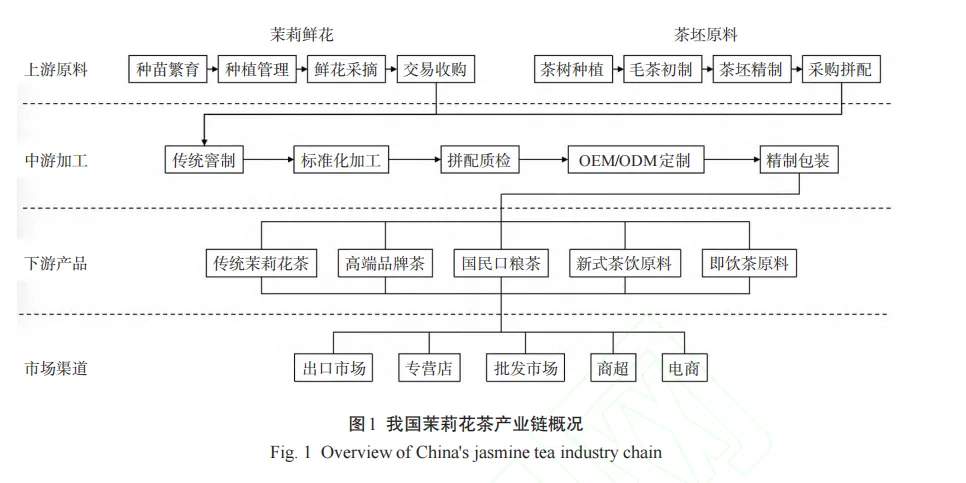
The jasmine tea industry chain: upstream raw materials, midstream processing, downstream products and channels.
Four origins, four strategies
The industry keeps concentrating into advantage regions, each with a distinct role: Hengzhou (Guangxi) handles 65.2% of the four origins’ total processing volume with scale and standardized supply; Fuzhou (Fujian) leans on traditional scenting craft, cultural value and high-end products; Qianwei (Sichuan) is accelerating into new-style tea raw material and order-based processing; Yuanjiang (Yunnan) exploits a longer flowering season as supplementary supply.
Market structure: domestic-heavy, exports rebounding at lower prices
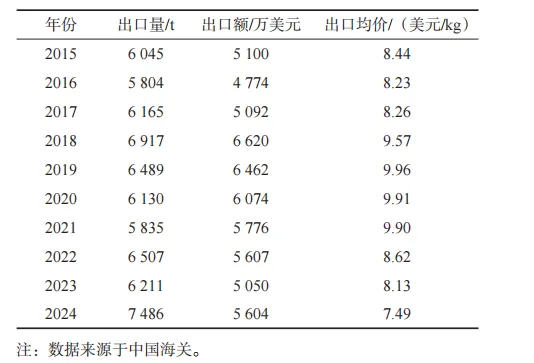
The industry sells mainly at home — in 2024 domestic volume was roughly 17 times export volume, with domestic sales value reaching RMB 25.26 billion on simultaneous growth in volume, price and value. On the export side, 2024 shipments to 72 countries and regions rose 20.5% year on year to 7,486 tonnes — the highest in a decade — yet the average export price slid to USD 7.49/kg: “volume recovery, price pressure.”
II. The Quiet Worry Inside the Boom
Scale is expanding, but value is not keeping pace. In 2024 the four main processing regions generated RMB 22.186 billion in industrial output, up 7.3% — while production grew 11.7% and the ex-factory price fell 4.0%.
This “volume up, price soft” pattern points at the core problem: as jasmine tea becomes a bulk commodity base, unit value is squeezed and the industry’s grip on the value chain loosens. Add volatile fresh-flower prices, unstable tea-base supply, aging flower farmers, the inheritance pressure on traditional scenting skills, and weak international brand presence. New-style tea buyers demand aromatic consistency, batch-to-batch stability and cost control — and some suppliers, chasing the volume, have drifted into pure OEM roles. If the industry stays in scale expansion and low-price homogenized competition, this dark horse will run out of steam.
III. How to Stay Hot
1. Cut cost and upgrade craft on the production side. Flower picking is seasonal and labor-intensive; scenting takes heavy manual work too. As labor costs rise, modernization must follow four rules — keep the core craft, automate repetitive steps, make key parameters measurable, make quality traceable — reducing overdependence on individual experience.
2. Build a layered supply system. A “national staple tea” is not a low-end tea; its core is stable quality, fair price and repeat purchase. For the new-style tea market, set B2B base-tea standards and develop differentiated bases for fruit teas and light-milk teas; keep traditional craft for the classic market; and let culture-rich origins like Fuzhou build high-end lines from limited batches paired with intangible-heritage craft.
3. Move from exporting raw material to exporting value. Young consumers increasingly buy emotional value and convenience. Jasmine tea’s prominent floral note fits everyday occasions easily, so the industry should extend into cold-brew, tea bags and sugar-free bottled tea — high-frequency formats — and distill an Eastern aroma aesthetic into its brand narratives for both domestic and international markets.
Verdict
The rise of new-style tea has genuinely given jasmine tea an incremental demand curve that whole-leaf tea never got, and opened a fresh window for tea bags, cold brews and even loose-leaf sales. But expanding demand is not the same as rising industry value. Whether jasmine tea stays hot comes down to one transition: from scale expansion to value appreciation. When a full-chain standard system is in place, technology truly lands on the factory floor, and origin regions deepen their coordination, this cup of Eastern fragrance can turn from a “dark horse” into a real thoroughbred.
Adapted from “Current Status and High-Quality Development Countermeasures of China’s Jasmine Tea Industry,” first published online in China Tea (No. 11, 2026), by Hong Qingyu, Fan Jie, Lin Mengxing, Tang Yan, Chen Fuqiao and Jiang Renhua. Source: WeChat account “China Tea”.