
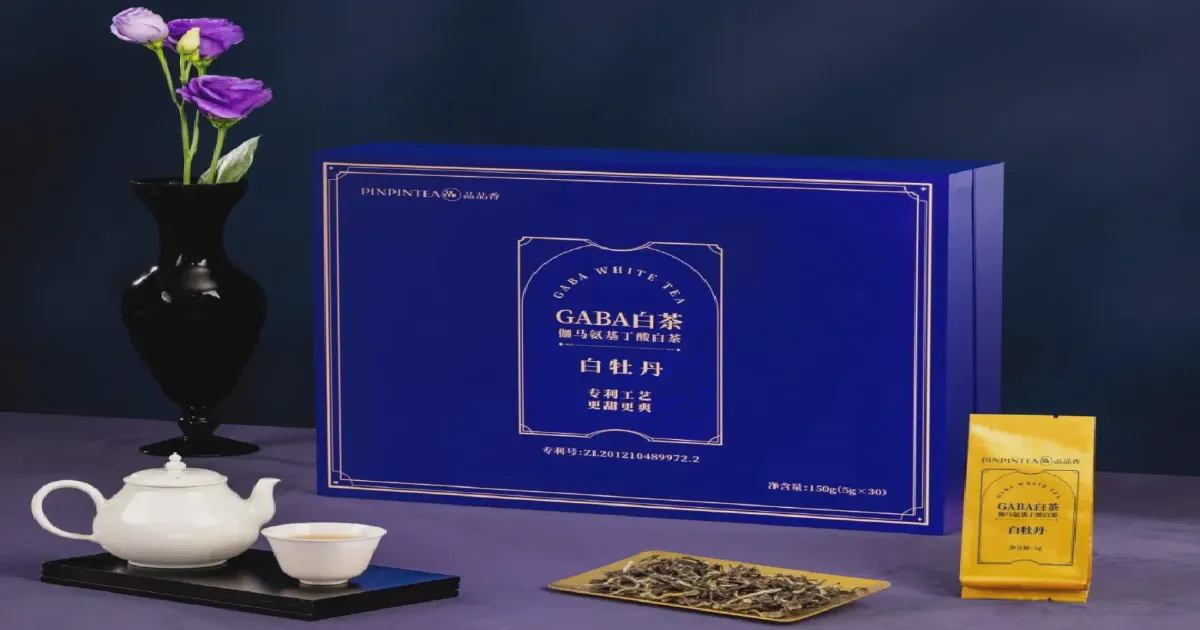
New Industry Trend? Opportunities and Challenges of GABA Tea
GABA can inhibit excessive neural excitement, shorten sleep onset time, and increase deep sleep duration. Zhongcha Longguan Company’s ‘Sleepy Tea’ increases the GABA content in tea by more than 10 times through special processes, focusing on its function of calming and aiding sleep. When insomnia becomes a problem for urban residents, a cup of sleep aid tea is becoming the most powerful entry point for tea companies to enter the health market. Figure source: Zhongcha Longguan. 2. Stress reduction and anxiety relief, driving the emotional consumption market. Studies show that GABA can indirectly affect cortisol levels by relieving stress and regulate brain electrical activity to promote nerve relaxation. Wanjia launched a sugar-free tea with added GABA last year, targeting high-pressure scenarios such as gatherings, interviews, and reports, emphasizing ‘stabilizing emotions and calmly enjoying’. Coca-Cola also once launched a sugar-free tea with GABA called ‘Body Refresh Tea W’ in Japan, claiming to have a calming and energizing effect during work or rest. Body Refresh Tea W Figure source: Coca-Cola Japan website. 3. Assisting in blood pressure regulation and cardiovascular protection. GABA acts on the vascular regulatory center, promoting vasodilation and assisting in lowering blood pressure. Japan was the first to develop GABA tea, with the initial purpose of creating a daily beverage for people with hypertension. Currently, there are many products in the Japanese market that claim to have blood pressure-lowering effects, with relatively mature technology. Figure source: Japan Food Industry News. 4. Other functions. Some studies have confirmed that GABA has other physiological functions such as reducing blood ammonia, anti-convulsant, improving brain function, and promoting growth hormone secretion, but there are few products on the market with these functions. II. How is GABA tea made? In 1987, Japanese researchers Tsujita Fujijiro and others increased the GABA content from 0.3 mg/g to 2.0 mg/g after 6 hours of anaerobic treatment with nitrogen gas, and named this tea ‘Gamma-Aminobutyric Acid Tea’. The core process of GABA tea is ‘anaerobic enrichment’. Fresh leaf picking: select fresh tea leaves with one bud and two or three leaves. Anaerobic treatment: place fresh leaves in a vacuum or nitrogen environment for several to ten hours of ‘anaerobic respiration’. During this process, glutamic acid in the tea leaves is converted into GABA in large quantities under the catalysis of glutamate decarboxylase, increasing the content by tens of times. The Chinese Academy of Agricultural Sciences Tea Research Institute has successfully developed a vacuum anaerobic processing technology for fresh tea leaves, which can make the GABA content in fresh tea leaves reach more than 2 mg/g. This technology is simpler, more cost-effective, and more effective compared to Japan’s nitrogen anaerobic treatment technology. Conventional tea making: After anaerobic treatment, the fresh tea leaves are unsealed and undergo traditional processes such as steaming (green tea), rolling, fermentation (black tea), or drying according to the target category. Currently, mature processing technologies have been developed for GABA green tea, black tea, oolong tea, and white tea. III. Future Development: From Single Function to ‘Super Component’ Advancement. Compared to the more mature functional food market in Japan, China’s GABA tea industry is still in its early stages and is facing an unprecedented development window. (1) Opportunity level. Data shows that more than 300 million people in China suffer from sleep problems, and the sleep economy market has doubled in nine years. Combined with the outbreak of Z-generation’s demand for emotional healing, it provides dual driving forces for GABA tea. In addition, the functional tea market is expanding at an annual compound growth rate of over 20%, and GABA tea, as a sub-category with health benefits, is expected to occupy a place in the market. At the same time, the entry of brands such as Wanjia and Mengniu has accelerated the public awareness of GABA tea. Plus the release of the ‘Safety Evaluation of Food Use of Gamma-Aminobutyric Acid’ (T/CADZ 0043—2025) last year, which lays a certain foundation for its widespread application. (2) Challenge level. Although some research has been done on the physiological effects of GABA tea, they are still not comprehensive enough. In terms of process, nitrogen treatment is costly, and infrared and microwave technologies have energy consumption and safety shortcomings. Anaerobic treatment tends to produce a ‘green odor’, thus affecting the flavor of the finished tea. There are still bottlenecks from laboratory to industrial mass production. In addition, most current products have highly homogenized functional positioning, focusing mainly on ‘sleep aid’ and ‘stress relief’, lacking in-depth segmentation of scenarios and populations. With the increasing number of participants, whether GABA tea can break out of the homogenization competition will determine whether it will continue to be popular or become a fleeting trend. (3) Outlook. The future development of GABA tea in the Chinese market depends on three aspects: First, whether more high-quality clinical studies (especially further verification of the gut-brain axis mechanism) can provide more solid evidence for the efficacy of oral GABA. Second, in the market, whether it can convert consumers’ functional demands for GABA into sustainable product consumption through scenario-based marketing and real cases. Third, in the industry, whether it can overcome process bottlenecks and establish a standardized quality system to achieve the transition from ’niche functional drink’ to ‘mainstream health choice’. As people pay more attention to health, and the physiological functions of GABA tea gradually become known to the public, it is believed that GABA tea will surely have its moment of glory in the Chinese market. 2026 ‘China Tea’ magazine continues to accept subscriptions ~ 2026 China Tea Regional Public Brand Value Assessment Report released Intercropping this plant can both eliminate weeds and enhance efficiency! White tea stored for ten years, what changes in flavor? This study gives an answer. 2026 spring and summer tea tree fertilization guidance released It is said that green tea should be drunk ’new’, but can aged green tea still be drunk? The ‘beauty trap’ of green tea: the greener the tea is not necessarily better.
GABA acts on the vascular regulatory center, promoting vasodilation and assisting in lowering blood pressure. Japan was the first to develop GABA tea, with the initial purpose of creating a daily beverage for people with hypertension. Currently, there are many products in the Japanese market that claim to have blood pressure-lowering effects, and the technology is relatively mature. Source: Japan Food Industry News.
- Other Functions: Some studies have confirmed that GABA also has physiological functions such as reducing blood ammonia, anti-convulsant, improving brain function, and promoting growth hormone secretion. However, products with these functions are rare in the market.
II. How is GABA Tea Made? In 1987, Japanese researchers Tsujita Fujiro and others increased the GABA content from 0.3 mg/g to 2.0 mg/g by subjecting fresh tea leaves to 6 hours of anaerobic treatment with nitrogen gas, and named this tea γ-aminobutyric acid tea. The core process of GABA tea is the ‘anaerobic enrichment’ procedure.
Fresh Leaf Picking: Select fresh tea leaves with one bud and two or three leaves. Anaerobic Treatment: Place the fresh leaves in a vacuum or nitrogen environment for several to ten hours of ‘anaerobic respiration’. During this process, glutamic acid in the tea leaves is converted into GABA under the catalysis of glutamate decarboxylase, increasing its content by tens of times. The Chinese Academy of Agricultural Sciences Tea Research Institute has successfully developed a vacuum anaerobic treatment technology for fresh tea leaves, which can increase the GABA content to over 2 mg/g. This technology is more convenient, cost-effective, and efficient compared to Japan’s nitrogen anaerobic treatment technology.
Conventional Tea Processing: After anaerobic treatment, the fresh tea leaves are unsealed and processed according to traditional methods such as killing green (for green tea), rolling, fermentation (for black tea), or drying. Currently, mature processing techniques have been developed for GABA green tea, black tea, oolong tea, and white tea.
III. Future Development: From Single Function to ‘Super Component’ Compared to the more mature functional food market in Japan, China’s GABA tea industry is still in its early stages and is now facing an unprecedented development opportunity.
(1) Opportunities: Data shows that currently over 300 million people in China suffer from sleep problems, and the scale of the sleep economy has doubled in nine years. Combined with the surge in demand for ’emotional healing’ among the Z-generation, GABA tea has received dual driving forces. In addition, the functional tea market is expanding at an annual compound growth rate of over 20%. As a niche category with health benefits, GABA tea is expected to occupy a place in the market. At the same time, the entry of brands like Wangwang and Mengniu has accelerated public awareness of GABA tea. Plus the release of the ‘Safety Evaluation of Food-Grade γ-Aminobutyric Acid’ (T/CADZ 0043—2025) last year, it has laid a certain foundation for its widespread application.
(2) Challenges: Although some research has been done on the physiological effects of GABA tea, it is still not comprehensive enough. In terms of process, nitrogen treatment is costly, and infrared and microwave technologies have energy consumption and safety shortcomings. Anaerobic treatment tends to produce an ‘unpleasant smell’, affecting the flavor of the finished tea. There are still bottlenecks in moving from laboratory to industrial mass production. Moreover, most current products have highly homogenized functional positioning, focusing mainly on ‘sleep aid’ and ‘stress relief’, lacking in-depth segmentation of scenarios and target groups. With the increasing number of participants, whether GABA tea can break out of homogenized competition will determine whether it continues to be popular or becomes a fleeting trend.
(3) Outlook: The future development of GABA tea in the Chinese market depends on three aspects: First, whether more high-quality clinical studies (especially further verification of the gut-brain axis mechanism) can provide more solid evidence for the efficacy of oral GABA. Second, in the market, whether scenario-based marketing and real cases can convert consumer demands for GABA functions into sustainable product consumption. Third, in the industry, whether the process bottlenecks can be overcome and a standardized quality system established, to achieve the transition from ’niche functional drink’ to ‘mainstream health choice’. With the growing attention to health and the gradual public recognition of the physiological functions of GABA tea, it is believed that GABA tea will eventually shine in the Chinese market. The 2026 issue of ‘China Tea’ magazine is still accepting subscriptions. The 2026 China Tea Regional Public Brand Value Assessment Report has been released. Planting this plant between tea fields can both control weeds and enhance efficiency! What changes occur in the flavor of white tea stored for ten years? This study provides an answer. The 2026 Spring and Summer Tea Fertilization Guidance has been released. It is said that green tea should be consumed ‘fresh,’ but can aged green tea still be drunk? The ‘beauty trap’ of green tea: the greener the tea, the better it may not be.
Existing studies have confirmed that GABA has various physiological functions such as lowering blood ammonia, anti-epileptic effects, improving brain function, and promoting the secretion of growth hormones. However, there are few products on the market with these functions. Second, how is GABA tea made? In 1987, Japanese researchers including Fujitaro Tsujita treated fresh tea leaves with nitrogen gas for 6 hours, increasing the GABA content from 0.3 mg/g to 2.0 mg/g, and named this tea ‘gamma-aminobutyric acid tea’. The core process of GABA tea is the ‘anaerobic enrichment’ procedure. Fresh leaf picking: select one bud and two or three leaves of tea plants. Anaerobic treatment: place the fresh leaves in a vacuum or nitrogen environment for several to ten hours of ‘anaerobic respiration’. During this process, glutamic acid in the tea leaves is converted into GABA under the catalysis of glutamic acid decarboxylase, and the GABA content increases by tens of times. The Chinese Academy of Agricultural Sciences Tea Research Institute has successfully developed vacuum anaerobic processing technology for fresh tea leaves, which can increase the GABA content in fresh tea leaves to more than 2 mg/g. This technology is simpler, more cost-effective, and more efficient compared to Japan’s nitrogen anaerobic treatment technology. Conventional tea processing: after anaerobic treatment, the fresh tea leaves are unsealed and processed according to the target category through traditional procedures such as stir-frying (green tea), rolling, fermentation (black tea), or drying. Currently, mature processing techniques have been developed for GABA green tea, black tea, oolong tea, and white tea. Third, future development: the path from single function to a ‘super component’. Compared to the more mature functional food market in Japan, China’s GABA tea industry is still in its early stages and is facing an unprecedented development window. (1) Opportunity level: Data shows that over 300 million people in China suffer from sleep problems, and the scale of the sleep economy has doubled in nine years, combined with the surge in demand for ’emotional healing’ among the Z generation, providing dual driving forces for GABA tea. Additionally, the functional tea market is expanding at an annual compound growth rate of over 20%, and GABA tea, as a sub-category with health benefits, is expected to occupy a place in the market. At the same time, the entry of brands such as Wangwang and Mengniu has accelerated public awareness of GABA tea. Plus the release of the ‘Safety Evaluation of Food Use of Gamma-Aminobutyric Acid’ (T/CADZ 0043—2025) last year, it has laid a certain foundation for its widespread application. (2) Challenge level: Although some research has been done on the physiological effects of GABA tea, they are still not comprehensive enough. In terms of process, nitrogen treatment is costly, infrared and microwave technologies have energy consumption and safety shortcomings, and anaerobic treatment may produce a ‘green odor’, affecting the flavor of the finished tea. There are still bottlenecks in moving from laboratory to industrial mass production. Moreover, most current products have highly homogenized functional positioning, focusing mainly on ‘sleep aid’ and ‘stress relief’, lacking in-depth segmentation of scenarios and populations. As more players enter the market, whether GABA tea can break out of the homogenization competition will determine whether it will continue to be popular or become a fleeting trend. (3) Outlook: The future development of GABA tea in the Chinese market depends on three aspects: first, whether more high-quality clinical studies (especially further verification of the gut-brain axis mechanism) can provide more solid evidence for the efficacy of oral GABA; second, whether the market can convert consumer demands for GABA functions into sustainable product consumption through scenario-based marketing and real cases; third, whether the industry can overcome process bottlenecks and establish a standardized quality system, achieving the transition from ‘a niche functional drink’ to ‘a mainstream health choice’. With increasing attention to health and the gradual recognition of the physiological functions of GABA tea by the public, it is believed that GABA tea will surely have its moment of glory in the Chinese market. The 2026 issue of ‘China Tea’ magazine is continuously being subscribed to~The 2026 China Tea Regional Public Brand Value Assessment Report was released. Intercropping this plant can both eliminate weeds and enhance efficiency! White tea stored for ten years, what changes in flavor? This study gives the answer. The 2026 spring and summer tea tree fertilization guidance was released. It is said that green tea should be drunk ’new’, but can aged green tea still be consumed? The ‘beauty trap’ of green tea: the greener the tea is not necessarily better.
Fresh Leaf Picking: Select tea leaves with one bud and two to three leaves. Anaerobic Treatment: Place the fresh leaves in a vacuum or nitrogen environment for several hours to 10 hours of ‘anaerobic respiration’. During this process, glutamic acid in the tea leaves is converted into GABA in large quantities under the catalysis of glutamate decarboxylase, increasing by tens of times. The China Academy of Agricultural Sciences Tea Research Institute has successfully developed vacuum anaerobic treatment technology for fresh tea leaves, which can increase the GABA content in fresh tea leaves to more than 2 mg/g. This technology is simpler, more cost-effective, and more efficient compared to Japan’s nitrogen anaerobic treatment technology. Conventional Tea Processing: After anaerobic treatment, the sealed fresh leaves are opened and processed according to the target type through traditional steps such as killing green (for green tea), rolling, fermentation (for black tea), or drying. Currently, mature processing technologies have been developed for GABA green tea, black tea, oolong tea, and white tea. Three, Future Development: From Single Function to ‘Super Component’ Advancement Compared to the more mature functional food market in Japan, the Chinese GABA tea industry is still in its early stages and is facing an unprecedented development window. (1) Opportunity Perspective: Data shows that over 300 million people in China suffer from sleep problems, and the scale of the sleep economy has doubled in nine years. Combined with the surge in demand for ’emotional healing’ among the Z-generation, it provides dual driving forces for GABA tea. In addition, the functional tea market is expanding at an annual compound growth rate of over 20%, and GABA tea, as a sub-category with health benefits, is expected to occupy a place in the market. At the same time, the entry of brands such as Wangwang and Mengniu has accelerated public awareness of GABA tea. Plus the release of the ‘Safety Evaluation of Food-Grade Gamma-Aminobutyric Acid’ (T/CADZ 0043—2025) last year, which has laid a certain foundation for its widespread application. (2) Challenge Perspective: Although some research has been done on the physiological effects of GABA tea, it is still not comprehensive enough. In terms of process, nitrogen treatment is costly, and infrared and microwave technologies have energy consumption and safety shortcomings. Anaerobic treatment tends to produce an ‘unpleasant smell’, affecting the flavor of the finished tea. There are still bottlenecks in moving from laboratory to industrial mass production. Moreover, most current products have highly homogenized functional positioning, focusing mainly on ‘sleep aid’ and ‘stress relief’, lacking in-depth segmentation of scenarios and populations. With the increasing number of participants, whether GABA tea can break out of homogenized competition will determine whether it continues to be popular or becomes a fleeting trend. (3) Outlook: The future development of GABA tea in the Chinese market depends on three aspects: first, whether more high-quality clinical studies (especially further verification of the gut-brain axis mechanism) can provide more solid evidence for the efficacy of oral GABA; second, whether the market can convert consumers’ functional demands for GABA into sustainable category consumption through scenario marketing and real cases; third, whether the industry can overcome process bottlenecks and establish a standardized quality system to achieve the transition from ’niche functional drink’ to ‘mainstream health choice’. As people pay more attention to health and the physiological functions of GABA tea gradually become widely recognized, it is believed that GABA tea will surely have its moment of glory in the Chinese market. The 2026 edition of the ‘China Tea’ magazine is continuously being subscribed to. The 2026 China Tea Regional Public Brand Value Assessment Report was released. Intercropping this plant can both eliminate weeds and enhance efficiency! Why does white tea change flavor after ten years? This study provides an answer. The 2026 Spring and Summer Tea Fertilization Guidance was released. It is said that green tea should be drunk ’new’, but can aged green tea still be consumed? The ‘beauty trap’ of green tea: the greener the tea is not necessarily better.
Conventional tea processing involves removing the seal from anaerobically treated tea leaves and subjecting them to traditional procedures such as fixation (for green tea), rolling, fermentation (for black tea), or drying, depending on the target category. Currently, mature processing techniques have been developed for GABA green tea, black tea, oolong tea, and white tea. III. Future Development: From Single Function to ‘Super Component’ Advancement Compared to the more mature Japanese market in functional foods, China’s GABA tea industry is still in its early stages and is now facing an unprecedented development window. (1) Opportunities: Data shows that over 300 million people in China suffer from sleep problems, and the sleep economy has doubled in size over nine years. Combined with the surge in demand for emotional healing among the Z-generation, this provides a dual driving force for GABA tea. In addition, the functional tea market is expanding at an annual compound growth rate of over 20%, and GABA tea, as a niche category with health benefits, is expected to occupy a place in the market. At the same time, the entry of brands like Wangwang and Mengniu has accelerated public awareness of GABA tea. Moreover, the release of the ‘Safety Evaluation of γ-Aminobutyric Acid for Food Use’ (T/CADZ 0043-2025) last year has laid a foundation for its widespread application. (2) Challenges: Although some research has been conducted on the physiological effects of GABA tea, it remains insufficiently comprehensive. In terms of process, nitrogen treatment is costly, and infrared and microwave technologies have energy consumption and safety issues. Anaerobic treatment can easily produce an ‘unpleasant green smell,’ affecting the flavor of the finished tea. There are still bottlenecks in moving from laboratory to industrial mass production. Additionally, most products have highly homogenized functional positioning, focusing mainly on ‘sleep aid’ and ‘stress relief,’ lacking in-depth segmentation by scenario and population. As more players enter the market, whether GABA tea can break out of the homogenization competition will determine whether it continues to be popular or becomes a fleeting trend. (3) Outlook: The future development of GABA tea in the Chinese market depends on three aspects: first, whether more high-quality clinical studies (especially further verification of the gut-brain axis mechanism) can provide solid evidence for the efficacy of oral GABA; second, whether the market can convert consumer functional demands for GABA into sustainable product consumption through scenario-based marketing and real cases; third, whether the industry can overcome process bottlenecks and establish a standardized quality system, achieving a transition from ’niche functional beverage’ to ‘mainstream health choice.’ With increasing attention to health and the gradual recognition of GABA tea’s physiological functions, it is believed that GABA tea will surely shine in the Chinese market in the future. The 2026 issue of ‘China Tea’ magazine is continuously being subscribed to. The 2026 China Tea Regional Public Brand Value Assessment Report has been released. Planting this plant between tea fields can both eliminate weeds and enhance efficiency! What changes occur in the flavor of white tea stored for ten years? This study provides an answer. The 2026 Spring and Summer Tea Fertilization Guidance has been released. It is said that green tea should be consumed ‘fresh,’ but can aged green tea still be drunk? The ‘beauty trap’ of green tea: the greener the tea, the better it may not be.
Data shows that more than 300 million people in China are currently suffering from sleep problems, and the scale of the sleep economy has doubled in nine years. Combined with the surge in demand for ’emotional healing’ among the Gen Z generation, this provides a dual driving force for GABA tea. In addition, the functional tea market is expanding at an annual compound growth rate of over 20%, and GABA tea, as a sub-category with health benefits, is expected to occupy a place in the market. At the same time, the entry of brands such as Wangwang and Mengniu has accelerated public awareness of GABA tea. Plus, the release of the ‘Safety Evaluation of Food-Grade Gamma-Aminobutyric Acid’ (T/CADZ 0043—2025) last year has laid a certain foundation for its widespread application. (2) Challenges: Although some research has been done on the physiological effects of GABA tea, it is still not comprehensive enough. In terms of process, nitrogen treatment is costly, and infrared and microwave technologies have energy consumption and safety shortcomings. Anaerobic processing tends to produce a ‘green stench’ that affects the flavor of the finished tea. There are still bottlenecks in moving from laboratory to industrial mass production. Moreover, most current products have highly homogenized functional positioning, focusing mainly on ‘sleep aid’ and ‘stress relief’, lacking in-depth segmentation by scenario and population. As more players enter the market, whether GABA tea can break out of the homogenized competition will determine whether it continues to be popular or becomes a fleeting trend. (3) Outlook: The future development of GABA tea in the Chinese market depends on three aspects: first, whether more high-quality clinical studies (especially further verification of the gut-brain axis mechanism) can provide more solid evidence for the efficacy of oral GABA; second, whether the market can convert consumer functional demands for GABA into sustainable category consumption through scenario-based marketing and real cases; third, whether the industry can overcome process bottlenecks and establish a standardized quality system to achieve the transition from ’niche functional beverage’ to ‘mainstream health choice’. With increasing attention to health and growing public awareness of the physiological functions of GABA tea, it is believed that GABA tea will surely shine in the Chinese market in the future. The 2026 issue of ‘China Tea’ magazine is now being accepted for subscription.~The 2026 China Tea Regional Public Brand Value Assessment Report was released. Intercropping this plant can both eliminate weeds and enhance efficiency! White tea stored for ten years, what changes in flavor? This study provides an answer. 2026 spring and summer tea tree fertilization guidance released. It is said that green tea should be drunk ‘fresh,’ but can aged green tea still be consumed? The ‘beauty trap’ of green tea: the greener the tea is not necessarily better.
Although some research has been done on the physiological effects of GABA tea, it is still not comprehensive. In terms of technology, nitrogen treatment is costly, and infrared and microwave technologies have energy consumption and safety shortcomings. Anaerobic treatment tends to produce a ‘green odor’ that affects the flavor of the finished tea, and there are still bottlenecks from laboratory to industrial mass production. In addition, most current products have highly homogenized functional positioning, focusing mainly on ‘sleep aid’ and ‘stress relief’, lacking in-depth segmentation by scenarios and population groups. With an increasing number of participants entering the market, whether GABA tea can break out of the homogenization competition will determine whether it will remain popular or become a fleeting trend. (3) The future development of GABA tea in the Chinese market depends on three aspects: first, whether more high-quality clinical studies (especially further verification of the gut-brain axis mechanism) can provide more solid evidence for the efficacy of oral GABA; second, whether marketing with scenario-based approaches and real cases can convert consumers’ functional demands for GABA into sustainable category consumption; third, whether the industry can overcome process bottlenecks and establish a standardized quality system to achieve the transition from ’niche functional beverage’ to ‘mainstream health choice’. As people pay more attention to health, and the physiological functions of GABA tea gradually become widely recognized, it is believed that GABA tea will surely have its moment of glory in the Chinese market. The 2026 issue of China Tea magazine is now accepting subscriptions. The 2026 China Tea Regional Public Brand Value Assessment Report was released. Planting this plant between tea fields can both eliminate weeds and improve efficiency! What changes occur in the flavor of white tea stored for ten years? This study provides an answer. The 2026 Spring and Summer Tea Fertilization Guidance was released. It is said that green tea should be consumed ‘fresh,’ but can aged green tea still be drunk? The ‘beauty trap’ of green tea: the greener the tea is not necessarily better.